
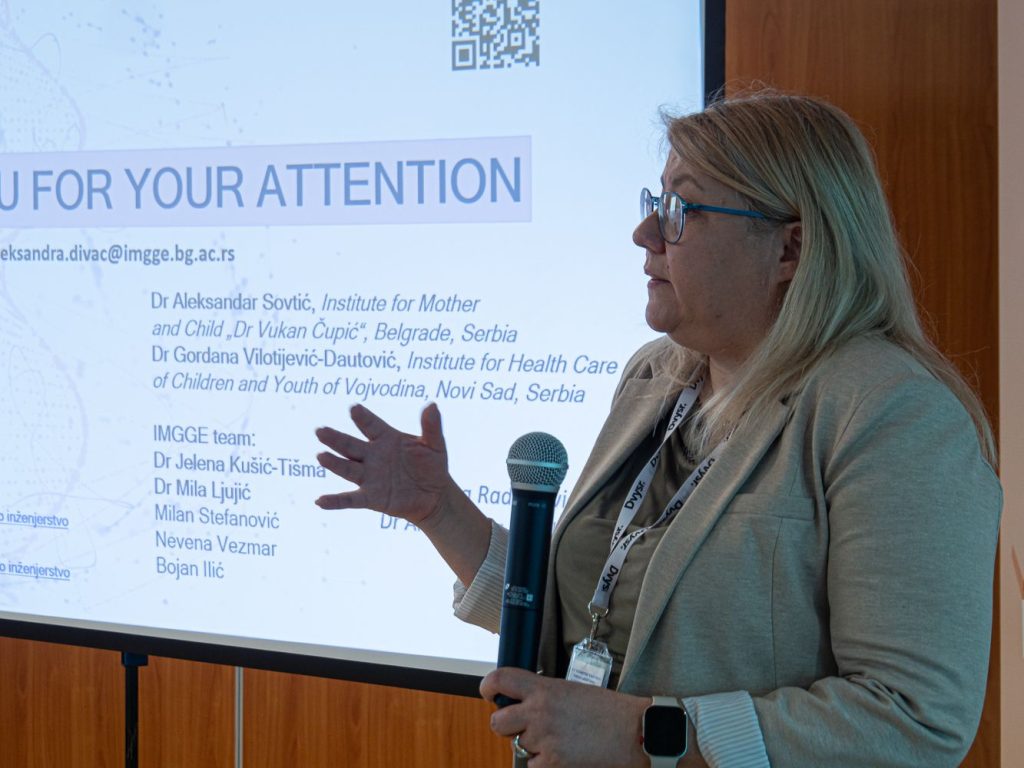
Bucharest, March 31, 2026 — Advances in next-generation sequencing (NGS) are continuing to reshape the landscape of molecular diagnostics, particularly in complex genetic conditions such as cystic fibrosis (CF). At the recent Devyser End-User Meeting in Bucharest, Aleksandra Divac Rankov shared practical insights from her laboratory’s transition to NGS-based CFTR analysis, contributing to a growing body of real-world experience in this evolving field.
The meeting brought together experts and end users focused on NGS applications in CF molecular diagnostics. As a speaker, Divac Rankov addressed one of the key shifts laboratories are currently navigating: moving from traditional Sanger sequencing to more comprehensive NGS workflows.
In her presentation, she outlined her team’s experience implementing the Devyser CFTR NGS workflow, emphasizing both operational challenges and clinical benefits. While the transition required adjustments in laboratory processes, validation protocols, and data interpretation, the advantages were clear. NGS enables broader mutation coverage, improved efficiency, and the potential for more precise and timely diagnoses.
Equally important was the opportunity for knowledge exchange among participants. The event fostered active discussion around best practices, implementation hurdles, and future directions in CF diagnostics, reflecting a shared commitment to advancing molecular testing standards.
Divac Rankov noted the value of collaboration in driving progress in this field, highlighting the role of industry and laboratory partnerships. She also acknowledged the organizers, Devyser and Elta 90 MS, for convening a focused and highly engaged group of professionals.
As NGS continues to gain ground in routine diagnostics, such forums play a critical role in bridging innovation and practice. The insights shared in Bucharest underscore the ongoing transformation of CF molecular diagnostics and the importance of continued collaboration across the community.